Where I live, in the UK, karak is everywhere now. There’s a place for it on most high streets and a cup in your hand within minutes. Adeni tea is another matter — I’ve hardly seen it sold here at all. That’s a shame, because the two get talked about as though they’re the same drink, and the karak vs Adeni tea mix-up only holds up until you’ve tasted them side by side, both made properly.
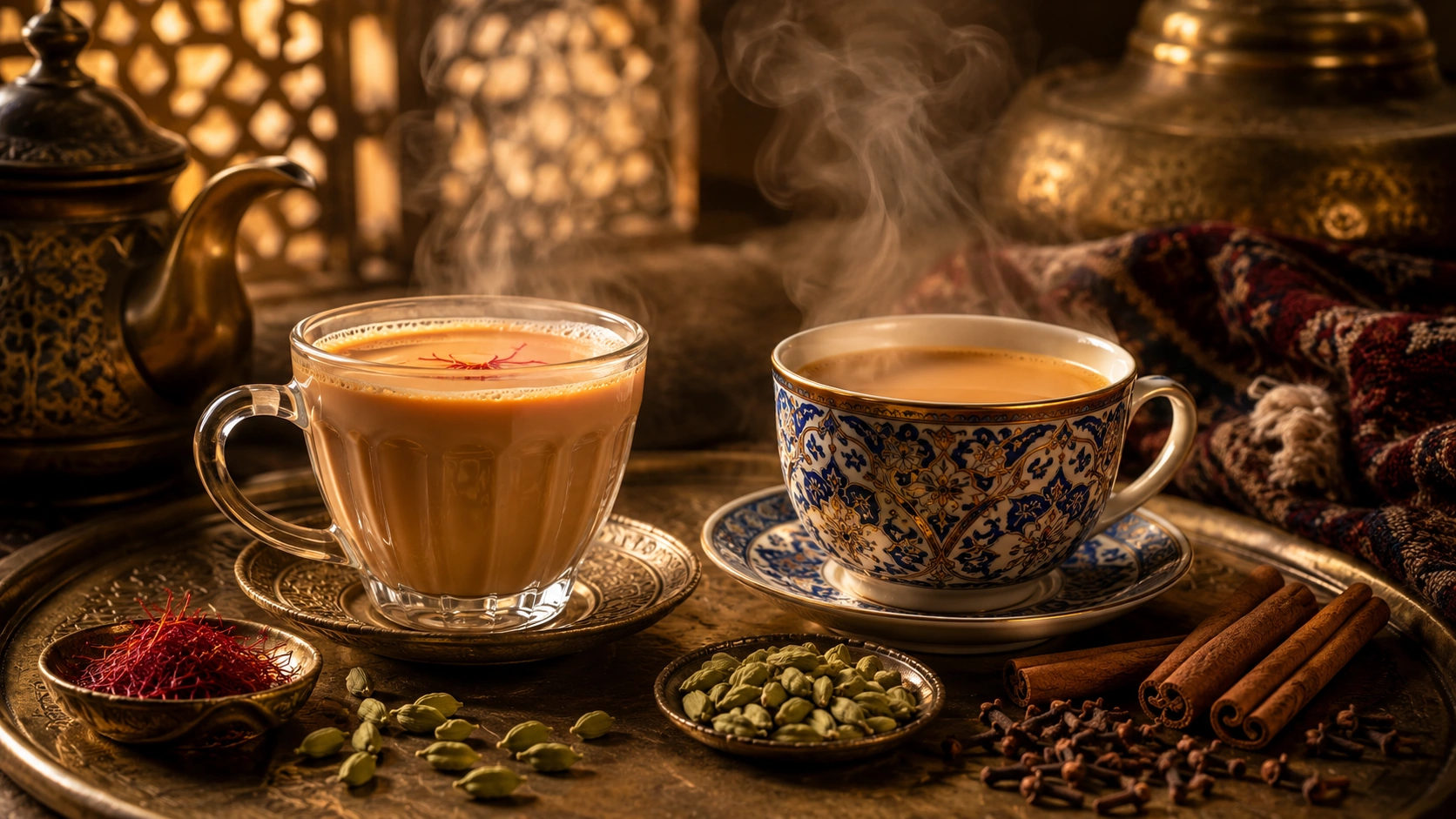
They do look like twins in the glass. The same caramel colour, the same soft cloud of steam, the same sweet first impression. If you only ever met them in passing you’d be forgiven for filing them under one name. But they grew up in different countries, for different reasons, and you can taste it once you know what you’re reaching for.
Karak came up from Kerala
Start with karak, since it’s the one most people meet first. The word is a Gulf softening of the Hindi kadak, meaning strong. It travelled to the Gulf last century with South Asian labourers, a great many of them from Kerala, who set up the small cafeterias that still turn out karak by the thousand cups a day. The drink took root so completely that it feels native to the Emirates, Qatar and the rest of the peninsula now, though its line runs straight back to the subcontinent.
Karak is built for strength and sweetness, and it’s honest about it. Black tea brewed dark, evaporated or condensed milk, a generous amount of sugar, all of it boiled together until it turns thick and almost syrupy. The spicing stays restrained — a little cardamom, every so often a thread of saffron, often nothing more. There’s no fault in that. A good karak is one of the great cheap pleasures and it does exactly what it sets out to do.
Where Adeni tea comes from
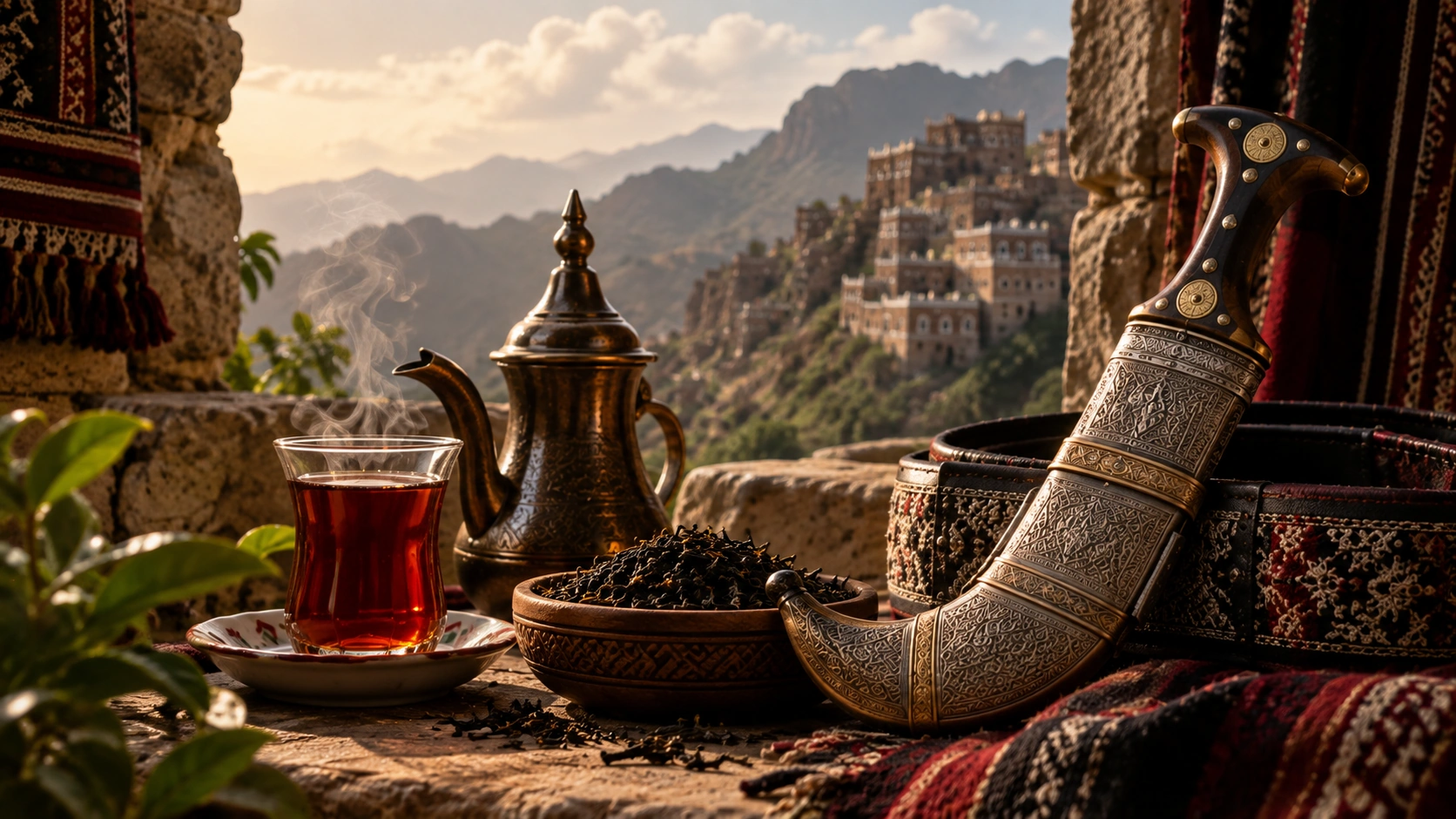
Adeni tea is the older relative, and it carries a different history. It comes from Aden, the port near the southern tip of Yemen, which spent the better part of a thousand years as one of the busiest trading crossroads on earth, a stop on the old spice road. The British took Aden in 1839 and governed it from India as a coaling and trans-shipment hub, and when the Suez Canal opened in 1869 the traffic only grew. Tea moved through that traffic in the 1800s, and the British-Indian habit of taking it milky and sweet came with it. The difference is that Aden already had its own shelves to raid: cardamom, cloves and cinnamon that had been passing through its markets for generations.
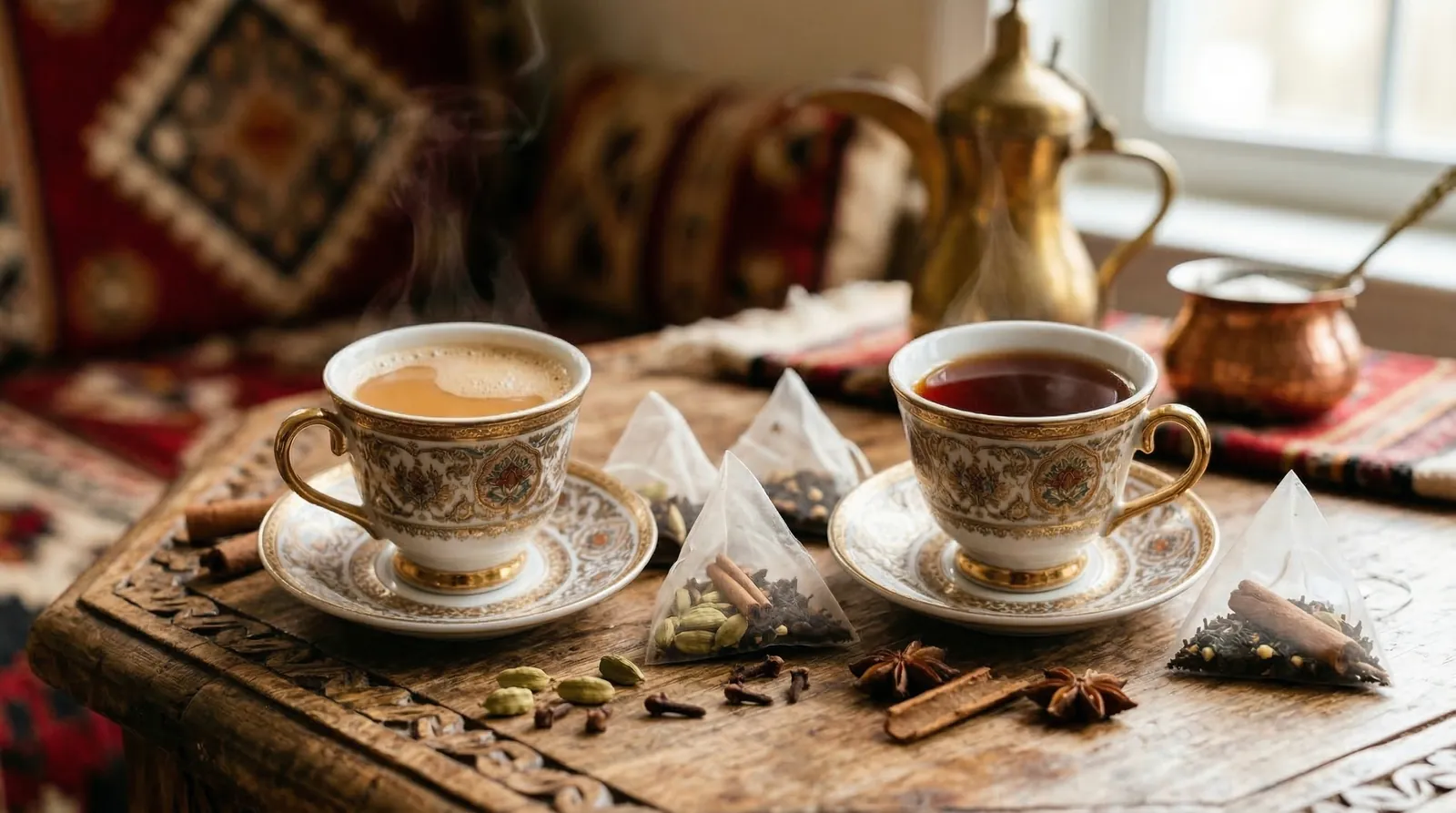
So the tea never stayed plain there. It got simmered slowly with those warm spices and a pour of tinned milk, which kept in the heat in the days before refrigeration. What you end up with is gentler and far more aromatic than a hard Gulf karak. The spice reaches you first, then the milk, then the tea underneath holding the whole thing steady.
If you want one line to keep them straight: Adeni is a Yemeni member of the wider karak family, set apart by those three spices and that one port. Every Adeni is a kind of karak. Not every karak earns the name Adeni.
Karak vs Adeni tea, side by side
| Karak | Adeni Tea | |
|---|---|---|
| Origin | Gulf states (via South Asian migrants) | Aden, Yemen |
| Name means | “Strong” (from Hindi kadak) | “From Aden” |
| Spices | Light — mostly cardamom, maybe saffron | Cardamom, cloves and cinnamon together |
| Flavour | Bold, strong, very sweet | Aromatic, layered, smoother |
| Milk | Evaporated or condensed | Evaporated or condensed |
| Built for | Strength and energy | Spiced and Aromatic |
How to tell them apart, and how Adeni goes wrong
Once you’ve had both made well, you can pick them out blind. Karak comes at you with sweetness and body; Adeni opens with aroma and lets the sweetness sit further back. The catch is that Adeni is the easier of the two to wreck, and a wrecked one is what most people have met.
It fails in two directions. Most watery cups are just rushed. There isn’t enough tea in the pot for the amount of water, or it comes off the heat too early before the black tea and spices have opened up. It wants a slow simmer, long enough to colour the milk and draw the spice out. The other failure is sweetness, and it’s the one I run into most. Sugar goes in easily and won’t come back out, so a heavy hand turns a fragrant cup into a flatly sweet one. A proper Adeni is sweet, but you should still be able to find the spice and the tea living beneath it.
I make mine a little against tradition. In place of condensed or evaporated milk I use whole milk, partly because it’s always in the fridge and partly because I prefer the cup lighter and cleaner. I let the tea and spices simmer until the colour deepens and the kitchen fills with cardamom, and I keep the sugar out of the pot altogether. The sweetening happens last, by the glass, with sugar or a little honey — so the person drinking it decides, rather than me deciding for them.
Getting a proper Adeni in the UK
Karak you can find on any UK high street. A proper Adeni is another matter, it’s harder to come by outside a Yemeni kitchen, and closing that gap is a good part of why we started Warda. The spice balance is the part that took the longest, getting enough cardamom to lead without sliding into soapiness while the cloves and cinnamon hold the warmth just behind it. We worked that out so you don’t have to keep a shelf of whole spices and stand over a pot to get a good cup. The slow brewing is still yours to do, the Yemeni tea tradition doesn’t bend on that one, and so is the sugar.
So if every Adeni you’ve had was thin or cloying, don’t blame the tea. Give it a low flame, a little time, and your own pinch of sugar at the end. Made that way it stops being a near-copy of karak and becomes its own thing.